Choosing the right technology stack is one of the most critical decisions when building a digital product. The right stack can help you build faster, scale better, and reduce long-term costs. The wrong choice can lead to technical debt, slow performance, and costly rewrites.
What is a Tech Stack?
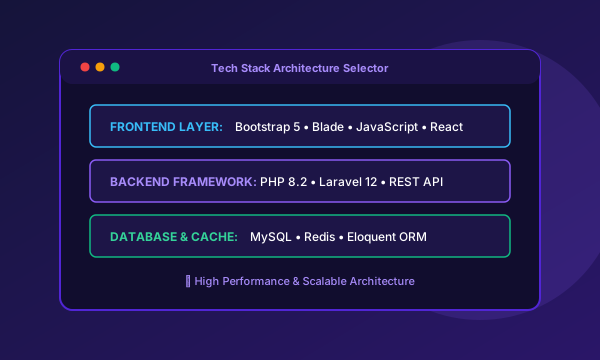
A tech stack is a combination of programming languages, frameworks, libraries, and tools used to build a web or mobile application. It consists of two key layers:
- Frontend (Client Side): Everything the user sees and interacts with, including HTML, CSS, JavaScript, and frameworks like Bootstrap or React.
- Backend (Server Side): The logic, database, and APIs that power the application behind the scenes, such as PHP, Laravel, Node.js, and MySQL.
Key Factors to Consider
1. Project Requirements & Goals
Understand whether you are building an MVP, a complex enterprise SaaS, or a high-traffic e-commerce portal.
2. Time to Market
Mature frameworks like Laravel offer built-in authentication, routing, and migrations to ship weeks faster.
3. Scalability & Performance
Ensure the stack can handle concurrent database queries and horizontal server scaling as users surge.
4. Developer Talent & Community
Choose stacks with large active ecosystems so finding experienced engineers and security patches is effortless.
Why Laravel + MySQL Remains a Powerhouse
For growing businesses, Laravel with MySQL provides an unbeatable sweet spot between development speed, security, and enterprise reliability. With native CSRF protection, Eloquent ORM, and rapid Blade templating, teams can focus on business value rather than low-level boilerplate.
Conclusion
No single tech stack is universally superior. The best stack is the one that aligns with your timeline, budget, and technical roadmap. If you are uncertain about what stack suits your next venture, consult experienced software engineers before writing your first line of code.